Unix Timestamp Converter - Epoch Seconds & Milliseconds to UTC & ISO 8601 Date
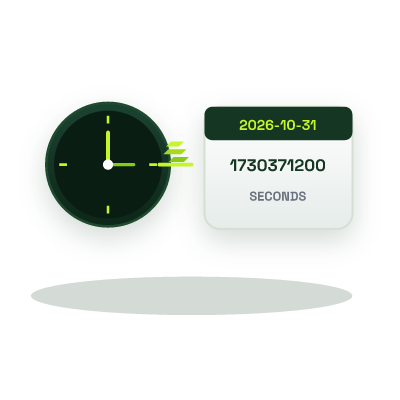
Convert Unix epoch timestamps (10-digit seconds or 13-digit milliseconds) into UTC, ISO 8601, and local timezone dates, or convert any human date back into epoch integers for JWTs, logs, and database queries.
This tool processes your input on your device.
Developer tools
Loading tool…
How to use it
Follow these steps in the workspace above.
- Paste a 10-digit (seconds) or 13-digit (milliseconds) Unix timestamp, or pick a calendar date and time.
- View the instant conversion across UTC, ISO 8601 (`YYYY-MM-DDTHH:mm:ssZ`), relative time, and your local system timezone.
- Copy the exact epoch integer or ISO string for your SQL query, API payload, or log filter.
How it works
Unix time (POSIX Epoch time) counts the number of elapsed seconds since 1970-01-01T00:00:00Z (midnight UTC on January 1, 1970), excluding leap seconds. Because epoch timestamps are timezone-agnostic integers, backend engineers use them universally across PostgreSQL/MySQL databases, JWT exp/iat claims, Redis TTLs, and application logs.
10-Digit Seconds vs. 13-Digit Milliseconds
- 10-Digit Epoch (Seconds): Used by POSIX systems, PHP, Python, Go, and JWT
expclaims (e.g., 1775000000). - 13-Digit Epoch (Milliseconds): Used by JavaScript
Date.now(), Java, and log aggregation timestamps (e.g., 1775000000000). - The Year 2038 Problem (Y2K38): Legacy systems storing epoch seconds as a signed 32-bit integer (INT32) will overflow at 2,147,483,647 on January 19, 2038 at 03:14:07 UTC. Always use 64-bit integers (BIGINT) or native TIMESTAMPTZ columns in modern schemas.
Inspecting an authentication token expiration claim? Paste the whole token directly into our JWT Decoder.